You’ve tidied the living room, vacuumed the rug, and lit a candle — but is your home actually guest-ready? The truth is, visitors form their first impression of your home within seconds of walking through the door, and it’s rarely the things you spent the most time on that they notice first. From the moment they step inside, guests are registering a handful of very specific sensory signals — most of them subconscious. Here’s exactly what they’re picking up on, and how to make sure those first impressions work in your favor.
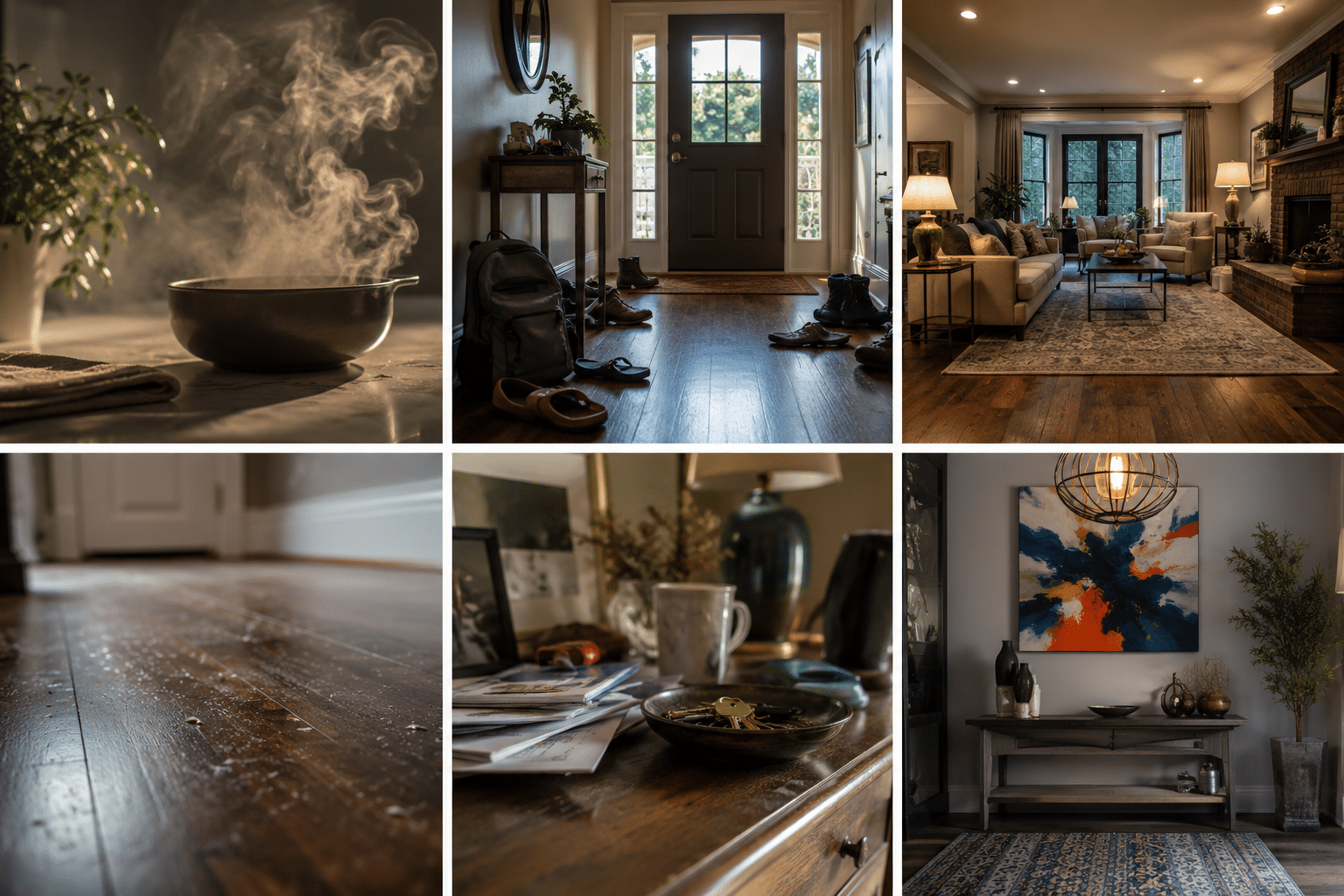
1. The Smell — Your Home’s Most Powerful First Impression
Before a guest sees a single piece of furniture, their nose has already formed an opinion. Scent is processed directly by the brain’s limbic system — the area responsible for emotion and memory — which means smell triggers an instant, visceral, largely subconscious reaction that is very difficult to override with visual cues afterward.
The most common odor offenders that guests notice immediately include lingering cooking smells (especially fried food, fish, or heavily spiced dishes), pet odors (which homeowners become nose-blind to surprisingly quickly), and musty or damp undertones that suggest poor ventilation or hidden moisture issues. Cigarette smoke, even residual, is also detected immediately and is among the hardest impressions to recover from.
The good news: you don’t need to buy expensive candles or diffusers to fix this. The single most effective thing you can do before guests arrive is open windows and let fresh air circulate for at least 30 minutes. Fresh air neutralizes odors rather than masking them — which is the critical difference between a home that smells genuinely clean and one that smells like it’s trying to cover something up. If you want to add a scent, keep it light and natural — a small amount of lemon, eucalyptus, or cedar goes much further than a heavily perfumed candle.
• Open windows 30–60 minutes before guests arrive
• Empty kitchen trash and recycling the day before
• Wash pet bedding weekly — it’s the single biggest source of pet odor
• Place a small bowl of baking soda in problem areas (near litter boxes, under sinks) to absorb odors passively
• Avoid heavily scented plug-ins near the entrance — they signal “covering something up” to guests
2. The Entryway — Where First Impressions Are Made or Broken
The entryway is the first physical space a guest inhabits in your home, and it communicates everything about what lies beyond it. A clear, welcoming entryway — even a small one — signals that the home is organized, cared for, and prepared for visitors. A cluttered foyer does the opposite, and the impression sticks.
The most common entryway problems that guests notice immediately: shoes piled near the door (creates an obstacle course feeling and looks chaotic), unopened mail or bags dumped on a surface (suggests the space is a dumping ground rather than a dedicated room), and coats hanging haphazardly or draped over chairs. None of these things are signs of a bad homeowner — they’re signs of a busy life — but they’re easy to address in the 15 minutes before guests arrive.
You don’t need a large or elaborate entryway to make a good impression. A simple bench with hidden storage, a hook rail for coats, and a small tray for keys and mail can transform even the most compact foyer into something that feels intentional and welcoming. The goal is to give guests a clear path in, a designated place to set their things, and the immediate visual sense that someone lives here thoughtfully.
• Grab a basket or bin and sweep shoes into it — out of the direct sightline
• Clear flat surfaces of mail, bags, and miscellaneous items into a drawer or closet temporarily
• Make sure there’s a clear, obvious place for guests to hang coats
• Add one simple decorative element — a small plant, a framed print, or a mirror — to make the space feel curated rather than transient
• Ensure the entryway light works and is warm-toned, not harsh white
3. The Lighting — The Invisible Hand That Sets Your Home’s Mood
Most homeowners underestimate how dramatically lighting affects the way a space feels. Guests may not consciously think “the lighting is bad” — but they will feel the result of bad lighting: a space that seems cold, neglected, smaller than it is, or vaguely unwelcoming. Lighting is the single design element that most reliably separates a space that feels lived-in and cozy from one that feels sterile or sad.
Dark, single-source overhead lighting (the flat ceiling light in the center of the room) is the most common culprit. It creates flat, unflattering light that casts hard shadows and makes spaces look smaller. The solution isn’t necessarily expensive — it’s about layering. Table lamps, floor lamps, and accent lights warm a room dramatically and create depth that a single overhead fixture simply cannot.
Bulb color temperature matters enormously. Warm white (2700K–3000K) creates the cozy, inviting glow that makes a home feel lived-in and welcoming. Cool white or daylight bulbs (4000K–6500K) feel clinical and institutional — fine for a home office, wrong for a living room or entryway. If you only make one lighting change before guests arrive, swap out any cool-white bulbs in your main living areas for warm white equivalents.
• Turn on all lamps before guests arrive — not just overhead lights
• Replace cool-white bulbs in living areas with warm white (2700K–3000K)
• Use dimmer switches where possible — lower the overhead, boost the lamps
• A lit candle on a coffee table or dining surface adds warmth and visual interest with zero effort
• Check that your entryway light is working — a dark doorway is an immediately negative signal
What Guests Notice First: Ranked by Impact
Not all first impressions carry equal weight. Based on home design research and guest experience surveys, some elements register far more strongly than others in those crucial first few seconds. The chart below ranks the six key elements by their relative impact on a guest’s overall first impression.