


Whether you live in a small apartment complex or a suburban house with enough yard to share, it can be challenging to navigate when you and your neighbors have issues. Living next door to an angry neighbor isn’t pleasant, whether they’re angry about the noise level or just don’t get along. It’s helpful to understand some basic communication strategies for dealing with angry neighbors so that everyone involved can feel heard. With this guide, find help recognizing signs of anger from your neighbors and taking steps toward diffusing the situation quickly and peacefully.
The Importance Of Dealing With Angry Neighbors

It’s essential to deal with angry neighbors for a variety of reasons:
- Squabbles between neighbors can escalate until there is outright violence or destruction of property.
- Strong feelings of hostility can create an unpleasant atmosphere that negatively impacts the neighborhood as a whole.
- It takes only one unhappy person in a building or block to create mistrust among fellow residents.
Those looking for ways to peacefully and effectively deal with angry neighbors should focus on communication and understanding since most conflicts are rooted in miscommunication or lack of knowledge about the other party’s intentions. Acknowledging each other’s feelings, setting boundaries, and coming up with mutually beneficial resolutions can help turn negative neighbor relationships into cooperative ones.
Ways To Deal With Angry Neighbors
Make An Effort To Learn More About Your Neighbors

In this day and age, neighborly relationships can be difficult. With the advent of social media and lack of personal interaction in your busy lives, it often takes considerable effort to get to know your neighbors and build friendships with them. When dealing with an angry neighbor, it is especially important to make an extra effort to learn more about them, understand their needs, and ultimately lessen the impact of a conflict.
Taking the time to get more information about your neighborhood dynamics can help you resolve disagreements faster. Moreover, learning more about your neighbors’ culture and lifestyle could open up new doors and opportunities for connection that will strengthen the community – even beyond any current disputation.
Respect Your Neighbor’s Boundaries

When dealing with an angry neighbor, it is essential to maintain respect for the other person and the boundaries that have been put in place. Respectful dialogue requires you to use words instead of aggressive body language, listen to your neighbors without interrupting them or passing judgment, and, most importantly, set clear boundaries up front.
Oftentimes, conflicts can escalate quickly when you forget to be mindful of boundaries, be it physical or emotional.
It is often useful to also agree on a time frame or solution to avoid any further misunderstandings arising between you and your neighbor. With mutual understanding and respect, difficult conversations become much smoother and calmer.
Consider Talking To Them In Person Or Over The Phone
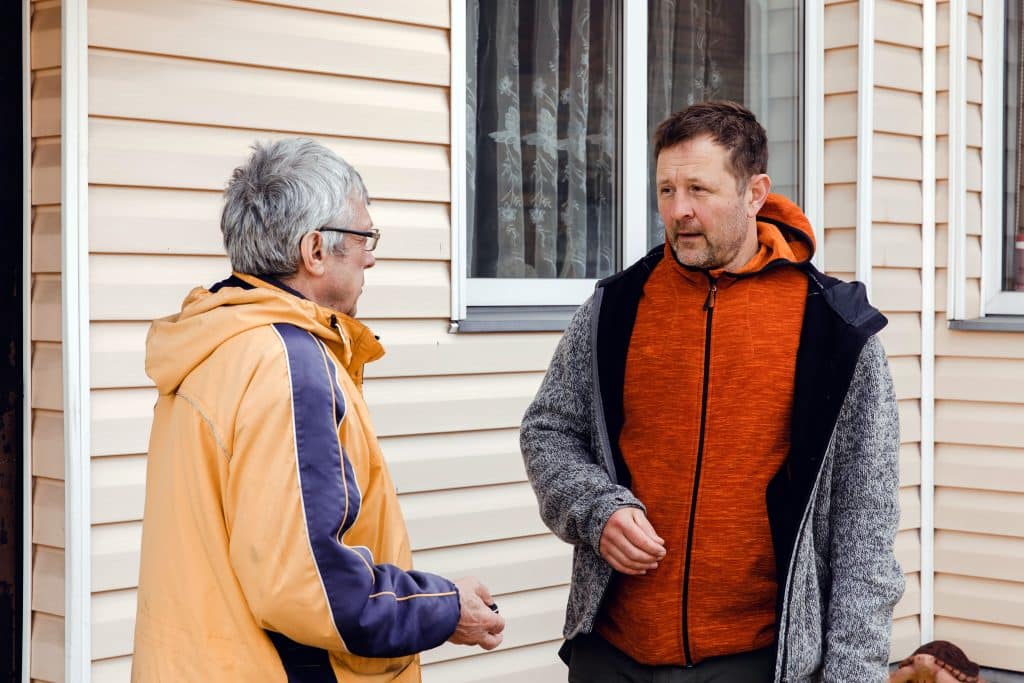
When dealing with angry neighbors, you don’t want to be one of those people who hides behind a computer or in an email. It’s very important to take a step back and try to talk to your neighbor directly so that the two of you can figure out how to resolve the issue. Whether face-to-face or over the phone, having a direct conversation may help bridge the divide and create understanding between the two parties.
Talking in person or on the phone also has the added benefit of bringing your neighbor in on a personal level, making them more likely to hear you out rather than ignoring your messages or calls. Being brave enough to have that difficult conversation and being honest about what happened can go a long way toward resolving any issues you have with your neighbor.
Try To View The Situation From Their Perspective

Dealing with angry neighbors can be a stressful experience, but it’s important to remember that both sides have valid opinions and feelings. Taking a step back and attempting to view the situation from their perspective is key to finding a solution. Doing so can help both parties better understand each other’s grievances and find common ground to work out the issue together in an amicable way.
It may also allow you to identify any underlying issues that might have caused the disagreement, helping prevent future arguments from happening. By looking at the situation from their point of view, you can create an open dialogue with your neighbor that leads to successful results for both of you.