


We all know how unclean, unhealthy, and polluted the air outdoors is, but the air inside your home can be contaminated too. One of the most dangerous and harmful air contaminants in the air inside homes is radon, and the worst thing about it is – homeowners won’t even know they’re breathing in bad air.
Radon gas is extremely dangerous. It’s one of the leading causes of lung cancer in non-smokers. It doesn’t produce any smell or a taste that you can feel in your mouth. And you won’t be able to see it like you can see soot.
There are numerous radon testing kits and devices that you can place around your house to detect radon gas or have a professional do radon testing. If you got the indoor air quality of your home tested and radon is detected, you might want to do something about it, and we suggest you address the problem right away.
Below is a list of numerous ways in which you can mitigate radon and the associated risks. Let’s get to the point without any adieu.
The radon mitigation method that you employ in your home depends on your house structure and the extent of radon contamination. However, some commonly used techniques have been listed down for you below.
Sub-Slab Depressurization (SSD)
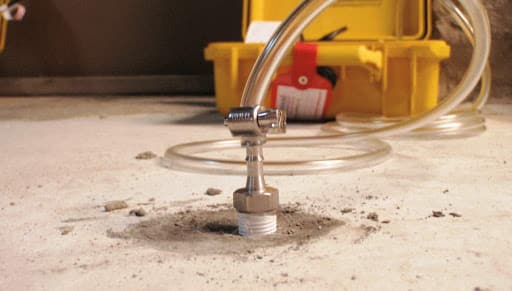
It’s one of the most widely used radon mitigation methods. It uses a PVC pipe and a fan to draw the air from below the basement floor and vent it out above the roof, where the radon gas dissipates rapidly.
Sub-Membrane Depressurization
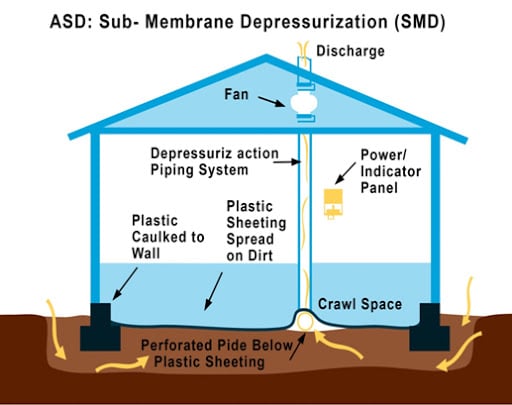
Some homes have crawl spaces that contain exposed dirt, and these crawl spaces can serve as a source of radon gas. One of the radon mitigation methods used in such spaces is the Sub-Membrane Depressurization. Special membranes made of plastic are used to encapsulate the dirt. Once encapsulated, the membrane is sealed around the support columns. Any plumbing slacks are accommodated under the dirt floor in the crawl space. Following this, a PVC collection pipe is sealed under the plastic membrane and is tied into the pipe connected to the fan and vent. Once the entire system is set up, the air is drawn from the sealed membrane and is removed through the vent. It also takes with it all the moisture from the soil of the dirt bed, and hence, this method serves a dual purpose – mitigating radon and dehumidifying the crawl spaces.