
Keep Growth Under Control

Bring it into your habit to practice relaxation techniques regularly. Children and adults can learn different mindfulness methods that can help them control their emotions and gain new insights. For example, with youngsters displaying aggressiveness, a particularly unique instructor in Tucson described adopting “the push/pull method.” This activity involves facing your child and allowing them to push their hands into your palm as they exhale. McCarthy claims that it will enable individuals to express their anger securely.
Children and parents can also use meditation practices to convey their mental health better. Find something that works for both of you and develop the habit! For example, you may attempt breathing techniques, mindful walking, and journaling.
Spiritual Growth

Set aside time to discuss the concepts of connectivity and transcendence. Inquire about their philosophical ideas, and you could be surprised! Time spent in nature, ideas inspired by a film, or a brief time and effort can all provide chances to pose these crucial questions. These don’t have to be uncommon occurrences. Make talking about spiritual matters with your kids a regular practice when they are small, and it will be more straightforward as they get older and the subjects become more complex.
Physical Development
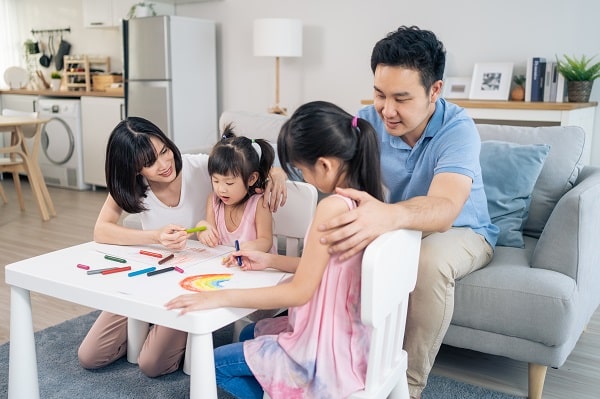
Show your children how to take care of themselves. Kids can sense their parents’ stress, according to a study. So it would help if you talked about your anxiety and why you’re practicing self-care. Allow your kids to explore healthy hobbies that help them cope with stress and practice self-care. You may normalize self-care and develop healthy stress reactions by modeling these habits.
Children’s Behavior, Objectives, Talents, And Psychological Health

Here are some strategies for promoting your child’s psychological health by focusing on behavior and attitude:
- Establish family standards for behavior and include your child in developing those rules and punishments. As your child gets older, modify the boundaries and regulations. Kids of all ages benefit from rules and expectations.
- Assist your kid in setting and attaining reasonable objectives for their ages and skills. And instead of praising the goal itself, reward your child’s efforts to accomplish it.
- Assist your child in learning how to resolve issues so that when they’re bigger, they’ll be able to do it independently. You can, for instance, assist your child in determining the problem, brainstorming possible solutions, and selecting a resolution to ensure.
- Motivate your kid to try something new, take calculated chances, and learn from failures. This can include things like joining a contest, presenting in front of a classroom, or climbing new play equipment, among other things.
Conclusion
Parents must recognize mental health as a dynamic process. Each of these eight suggestions offers a strategy to help your child’s mental wellbeing as a regular aspect of their growth. These developmental recommendations could become healthy routines that help individuals create intellectually strong kids.