
5. Think About Solar Panels

Solar panels could be a good investment if you are able to afford them. You can also have them placed on your roof, and they can really help you save money on your energy bills by allowing you to generate your own.
This is definitely something to think about, particularly when you consider how cost-effective they are. It isn’t for everyone; however, as the green movement progresses, you’ll see an increasing number of individuals opting to have solar panels put in their houses.
6. Install Programmable Thermostats
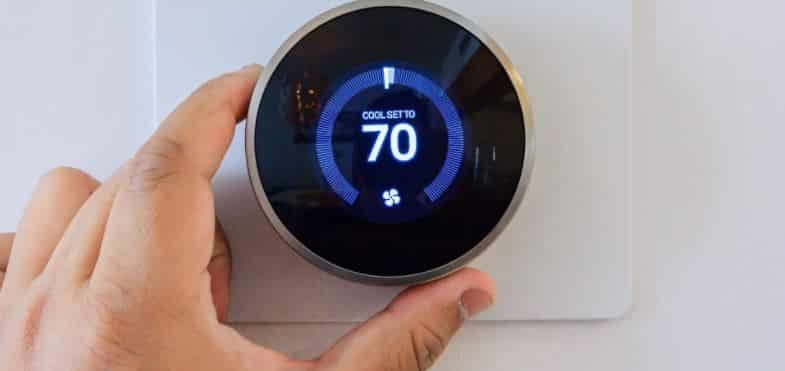
Another effective method to reduce energy use in your home is to use a programmable thermostat. Adjust the thermostat to lower or higher temperatures while you’re gone, depending on the season. A programmable thermostat is inexpensive, and the money saved by lowering energy use may pay for it in as little as a few months.
7. When You’re Not Using a Gadget, Turn It Off
When not in use, an idle desktop computer, microwave oven, coffee machine, or printer that is fitted with LED clocks waste electricity. When you don’t need them right away, turn them off. When you’re going to be gone from your home for an extended period of time, turn off your refrigerator.
When you compute the energy saved at the end of the year, these little savings add up to significant savings. When not in use, disconnect battery chargers as well. Even when they aren’t charging their gadgets, chargers for mobile phones, computers, and similar wireless devices use a lot of energy.
8. Turn On the Water Heater to The Warm Setting

Making a couple of these changes may help you save money on your energy costs. To begin, set the water heater to a warm setting (about 120°F – 130°F). To wash your clothing and dishes, you don’t need water that’s any hotter than this. Second, utilize low-flow shower and bath fittings, and third, insulate the hot water pipes to prevent them from rapidly cooling.
9. Make Sure Your HVAC System Is in Good Working Order
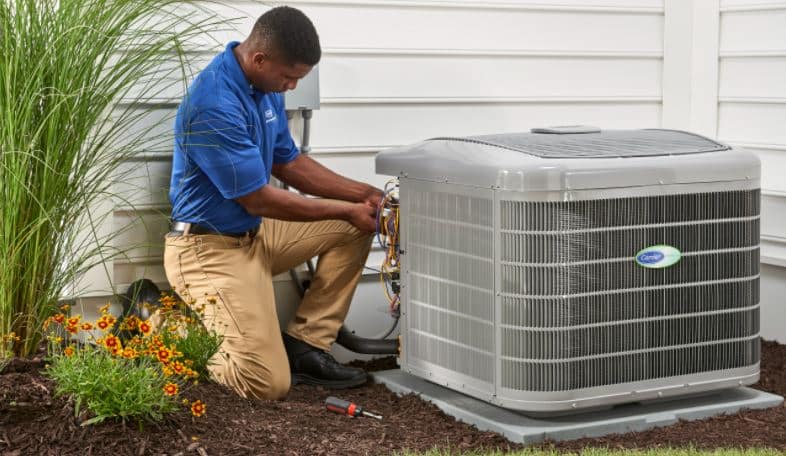
Annually tune up the HVAC units to guarantee that the furnace and air conditioner are operating at optimum efficiency, saving you money month after month. Connections are tightened, components are correctly greased, and coils are cleaned during a home cooling and heating check-up, which improves efficiency. Tuning up the HVAC system may also save you money on a furnace replacement, which can be very costly.
10. Be A Clever Cook

Cooking wastes a significant amount of energy. Certain data show that less wasteful cooking methods, such as convection ovens, are much more efficient than standard ovens.
Convection ovens utilize fans to push hot air into greater circulation and uniformly, preparing food at lower temperatures while using about 80% less energy. They also use roughly 20% less power than traditional ovens. Cooking time is drastically reduced when using a pressure cooker. Cooking in covered pots heats food faster than cooking in open pans and pots.
