


Delving into the captivating world of aquatic flora offers a unique look at how life thrives beyond terrestrial boundaries. These plants add scenic beauty to water bodies and play a crucial role in balancing aquatic ecosystems by providing food and habitat to marine and freshwater creatures. From the floating leaves of water lilies to the complex root systems of mangroves, each plant has developed specialized adaptations to survive and flourish in their watery realms. This article introduces the reader to nine astonishing plants that exclusively grow in water. Each plant featured herein is explored through its unique features and ecological significance, offering an intriguing journey through the wonders of aquatic plant life.
Victoria Amazonica – The Giant Water Lily

Victoria Amazonica, predominantly found in the Amazon River Basin, is renowned as the world’s largest water lily. This extraordinary plant can display leaves spanning up to 10 feet and flowers about a foot wide. Interestingly, the leaves are so buoyant and sturdy that they can support the weight of a small child if the weight is evenly distributed.
The Victoria Amazonica features night-blooming flowers that change color, transforming from white to pink within 48 hours. Beyond their aesthetic appeal, these enormous lilies also play an ecological role. They provide a habitat for aquatic life forms, from fish to insects, serving as a small ecosystem. Moreover, local populations use the plant in traditional practices, cementing its importance in ecology and culture.
Duckweed – The Simplest Flowering Plant

One of the most ubiquitous freshwater plants, Duckweed is essentially aquatic and comprises the smallest flowering plants in the world. They float atop water bodies and have no stem or leaves in the conventional sense, giving them a deceptively simple appearance. Despite this, they are powerhouse plants that pack a range of functionalities into their small form.
Duckweed is renowned for its quick reproduction rate; it can double its population in just 16 hours under the right conditions. This rapid proliferation makes Duckweed a highly effective option for water oxygenation, a critical aspect of aquatic ecosystems. Additionally, it serves as a food source for numerous aquatic animals, thereby playing a vital role in the food web. Yet, its invasive growth can sometimes clog waterways if not managed properly.
Venus Flytrap – The Carnivorous Marvel

The Venus Flytrap stands out among aquatic plants for its carnivorous diet, a rarity in the plant kingdom. Native to the subtropical wetlands of North and South Carolina, this fascinating plant relies on a unique mechanism to catch and digest its prey, mainly insects and arachnids. Despite its intimidating attributes, the Venus Flytrap remains vulnerable due to habitat loss.
Unlike most plants, the Venus Flytrap has specialized trap-like structures with sensitive hair triggers. When an unsuspecting insect steps onto the trap, the hair triggers send a signal, snapping the trap shut in less than a second. Beyond its captivating trapping method, the Venus Flytrap plays an important role in its ecosystem by controlling insect populations. It also contributes to nutrient cycling, obtaining essential nutrients like nitrogen from its prey rather than relying solely on soil.
Water Hyacinth – The Invasive Beauty
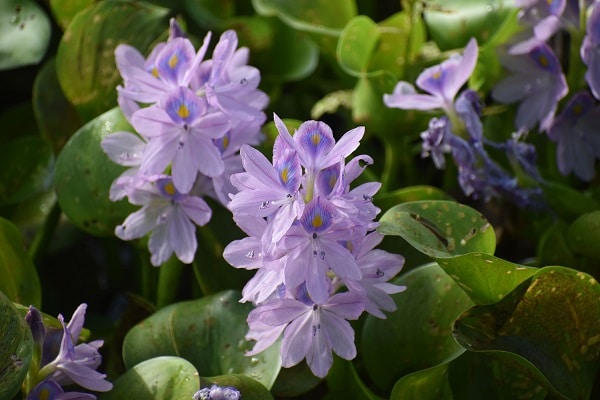
Native to the Amazon basin, Water Hyacinth is an aquatic plant that is as beautiful as it is invasive. Known for its lavender-blue flowers and glossy green leaves, the plant has become a popular decorative feature in ponds and lakes. However, behind this attractive facade lies an invasive species capable of causing significant ecological damage.
One of the most distinguishing features of the Water Hyacinth is its astonishing reproduction rate. Under optimal conditions, the plant can double its population size in just a few weeks. While its beautiful flowers attract admirers, its rapid growth rate is a cause for concern among ecologists. The Water Hyacinth can clog waterways, disrupt local fishing activities, and threaten aquatic biodiversity by starving native plants of essential nutrients and light.