


Eelgrass – The Underwater Meadow
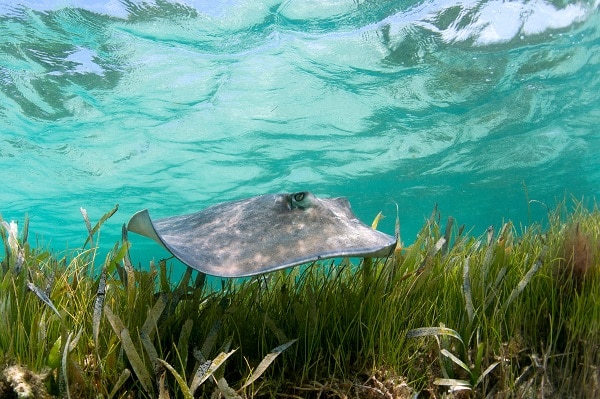
Eelgrass thrives in temperate and coldwater marine environments, creating underwater meadows reminiscent of terrestrial grasslands. Unlike seaweed, which it superficially resembles, eelgrass is a flowering plant with complex root and shoot systems. These underwater meadows are biodiversity hotspots, providing crucial habitats for many marine creatures.
One of the most intriguing aspects of eelgrass is its submerged pollination. While most aquatic plants depend on water currents or external agents like insects for pollination, eelgrass can accomplish this underwater. The plant plays a vital role in coastal ecosystems by offering erosion control and acting as a carbon sink, absorbing carbon dioxide from the atmosphere and converting it into biomass.
Kelp – The Underwater Forests
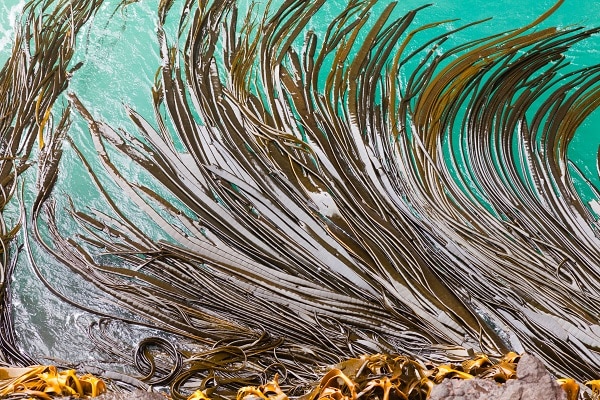
Belonging to the brown algae family, kelp forms towering underwater forests that are a sight to behold. These ecosystems are among Earth’s most productive and complex, rivaling even the tropical rainforests in biodiversity. Kelp forests can grow incredibly quickly, up to 18 inches daily, under ideal conditions.
Kelp’s unique features include its fast growth rate and high capacity for nutrient absorption, notably of nitrogen and phosphorus. These ‘forests’ support many marine life, from tiny plankton to large mammals like seals and sea otters. Kelp forests also serve as a significant carbon sink, absorbing large amounts of carbon dioxide from the atmosphere, thus playing a role in climate mitigation.
Mangroves – The Coastal Guardians
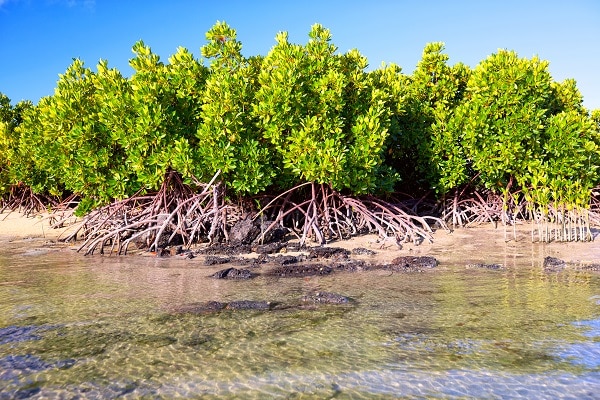
Mangroves are more than salt-tolerant trees; they are guardians of the coast. Occupying the margins of estuaries and coastal regions, mangroves have evolved complex root systems that enable them to thrive in saline conditions. These plants are critical for the health of coastal ecosystems and human communities.
Mangroves feature complex root systems that anchor the plant in shifting sands and serve as nurseries for young fish and crustaceans. Additionally, these roots act as natural filtration systems, purifying water by trapping pollutants and sediments. Mangroves also provide a critical line of defense against storm surges and tsunamis, serving as natural barriers protecting coastal communities.
Pitcher Plant – The Insect Drowner
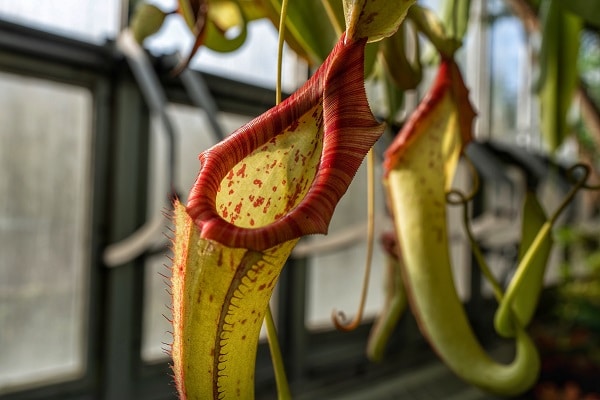
Pitcher plants are fascinating carnivorous plants native to North America. Often found in water-rich environments like bogs and swamps, these plants have evolved an ingenious method to capture and digest insects. They rely on a specialized leaf structure that forms a ‘pitcher,’ filled with liquid, to drown their prey.
The pitcher-shaped leaves secrete nectar along the rim to attract insects. Once lured, the insect slips into the pitcher, where it drowns and is digested by the plant’s enzymes. This unique feeding mechanism enables pitcher plants to survive in nutrient-poor soils by supplementing their diet with essential nutrients from their prey. Like the Venus Flytrap, they control insect populations and contribute to nutrient cycling in their ecosystems.
The Bottom Line
The world of aquatic plants is as diverse as it is fascinating. From the gigantic leaves of the Victoria Amazonica to the carnivorous abilities of the Venus Flytrap and Pitcher Plant, these water dwellers showcase the remarkable adaptability of nature. They play significant ecological roles, from providing habitat to aquatic life to serving as natural water filters. As the Earth faces mounting environmental challenges, understanding these unique aquatic plants’ value and function becomes even more crucial. They enrich our understanding of biodiversity and offer a broader perspective on the intricate and delicate balance of life on Earth.