

Broadleaf Plantain (Plantago major)
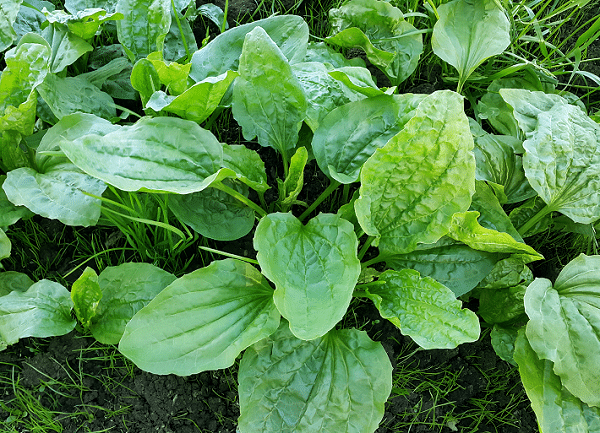
Broadleaf Plantain is easily identified by its broad, oval-shaped leaves that grow in a rosette pattern close to the ground. This perennial weed thrives in compacted soils, often signaling areas where the lawn might be experiencing stress. The weed’s adaptability allows it to grow in a variety of conditions, from dry, poor soils to well-irrigated gardens.
For those targeting Broadleaf Plantain, the initial step is to alleviate soil compaction. This can be achieved through core aeration, which also promotes healthier grass growth. While herbicides can be effective against this weed, manual removal, ensuring the entire root is extracted, can also yield successful results. Since this weed thrives in stressed lawns, ensuring good lawn health through proper watering, mowing, and fertilization practices can naturally deter its proliferation.
Clover (Trifolium repens)

Clover, specifically white clover, often pops up in lawns with low nitrogen content. This is because clover can fix nitrogen from the atmosphere, making it beneficial in some respects. Its small, trifoliate leaves and white to pinkish flowers are hard to miss. While many see it as a weed, others appreciate clover for its ability to enrich the soil and attract pollinators.
The approach to clover largely depends on a homeowner’s perspective. Those aiming for a traditional, uniform lawn might consider it a nuisance. For them, improving soil health, especially increasing nitrogen levels, can deter clover growth. Herbicides designed for broadleaf weeds can be applied if necessary. On the other hand, if one wishes to maintain clover, simply mowing regularly and allowing it to coexist with the grass can lead to a diverse and lively lawn ecosystem.
Bindweed (Convolvulus arvensis)

Bindweed, often mistaken for morning glory, wraps itself around plants and structures, giving it its alternative name, “creeping Jenny.” This perennial weed is notorious for its twining stems and trumpet-shaped flowers. Its growth habit allows it to outcompete and strangle desirable plants, making it a bane for gardeners and lawn enthusiasts.
Managing Bindweed poses a significant challenge due to its resilient rhizomatous root system. While herbicides can be employed, they often need multiple applications, and care must be taken not to harm surrounding plants. On the other hand, consistent physical removal, ensuring as much of the root system is extracted as possible, can slowly diminish its presence. Mulching garden beds can also act as a deterrent, preventing sunlight from reaching and stimulating bindweed seeds.
Chickweed (Stellaria media)

Chickweed is a winter annual that thrives during cooler temperatures. Its smooth stems and small, star-shaped white flowers can rapidly cover vast areas, making it a notable concern for lawns. Although it dies off during hot summers, the sheer number of seeds it produces ensures its return with the next drop in temperature.
The shallow root system of Chickweed means physical removal can be effective, but it’s essential to act before it sets seed. Mulching can be a beneficial barrier, stopping chickweed seeds from germinating. For those considering chemical control, post-emergent herbicides designed for broadleaf weeds can be applied during its active growth phase. Consistent monitoring and early intervention are vital to prevent a chickweed takeover.
The Bottom Line
A lush, weed-free lawn requires both diligence and knowledge. Recognizing and understanding invasive weeds is crucial for effective management. Tackling these undesirables at the right stage of their growth, using appropriate methods, can lead to a thriving garden space. Moreover, a proactive approach, rooted in fostering a robust lawn ecosystem, often proves more effective than reacting once weeds have firmly established themselves. It’s a journey of continuous learning and adaptation, but the rewards—a verdant, healthy lawn—are well worth the effort.
Don’t kill the Dandelions. Harvest them every spring preferably before they flower for a delicious meal with butter and vinegar.