

Why Your Washing Machine Might Be Growing Mold Right Now
The hidden conditions inside your appliance create a perfect environment for fungal growth, posing risks to both your laundry and your health.
Your washing machine might be growing mold right now, and you may not even realize it until that telltale musty odor clings to your freshly cleaned clothes. This common household problem affects millions of washing machines across the country, particularly front-loading models that have become increasingly popular over the past two decades. The very design features that make modern washers more water-efficient and gentler on fabrics also create ideal conditions for mold and mildew to flourish. Understanding why this happens and how to prevent it can protect both your appliance investment and your family’s health from the consequences of unchecked fungal growth in one of your most frequently used home appliances.
Understanding How Mold Thrives in Front-Load Washers
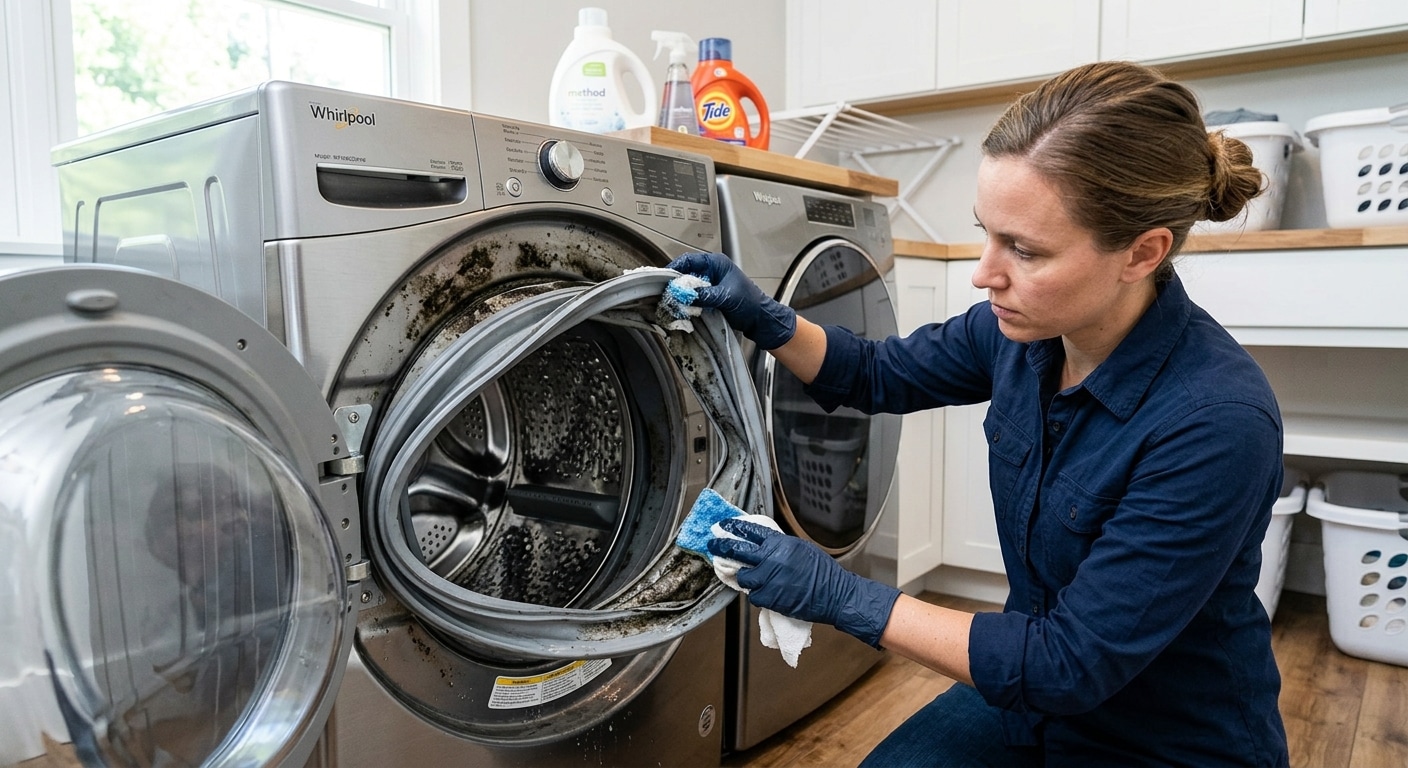
Mold requires three essential elements to grow: moisture, warmth, and organic material to feed on. Front-loading washing machines provide all three in abundance. The horizontal drum design, while excellent for cleaning efficiency and water conservation, retains small amounts of water in the rubber door gasket and various crevices after each wash cycle. This trapped moisture, combined with the warmth of a typical laundry room and the constant supply of detergent residue, fabric softener, and soil particles from clothing, creates what mycologists describe as an optimal environment for fungal colonization. The most common species found in washing machines include Cladosporium, Aspergillus, and Penicillium, with black mold varieties being particularly prevalent in the rubber door seals where moisture accumulates.
Key Conditions for Mold Growth
Moisture: Front-load washers retain water in gaskets and dispensers between cycles.
Temperature: Laundry rooms typically remain between 60-80°F, ideal for fungal growth.
Organic Material: Detergent residue, fabric softener buildup, and soil from clothes provide nutrients.
Darkness: Closed washer doors create dark environments where mold thrives undisturbed.
Why Modern Washing Habits Encourage Mildew Buildup
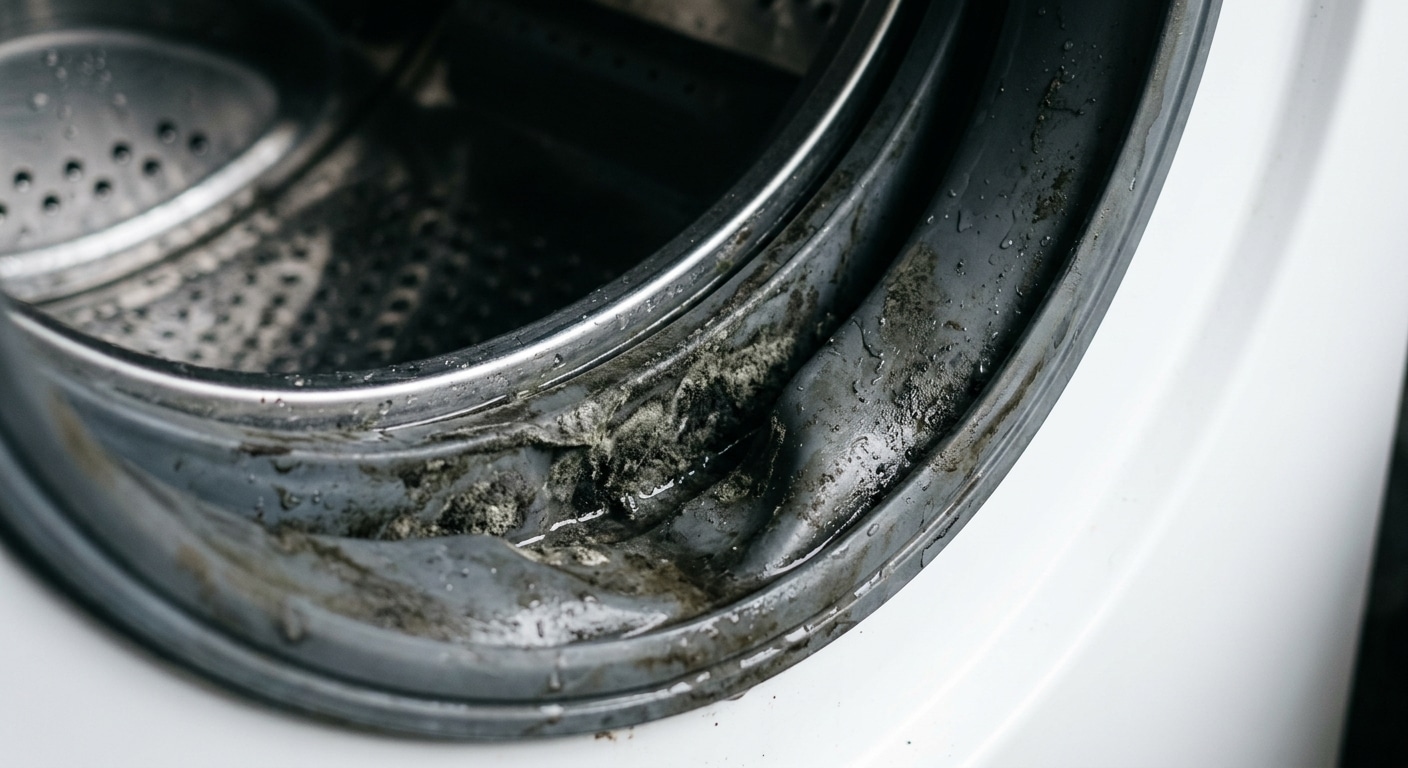
Contemporary laundry practices have inadvertently contributed to the mold problem in washing machines. The widespread shift to cold water washing, while beneficial for energy savings and fabric preservation, eliminates the sanitizing effect that hot water cycles once provided. Water temperatures below 140°F fail to kill mold spores effectively, allowing them to survive and multiply between wash loads. Additionally, the trend toward high-efficiency liquid detergents, which produce fewer suds, has led many consumers to use excessive amounts of product in an attempt to see visible cleaning action. This overuse creates soap residue buildup that serves as a food source for mold colonies.
The practice of closing the washer door immediately after removing clothes compounds these issues significantly. When the door remains shut, moisture cannot evaporate from the drum interior and gasket folds, maintaining the humid microclimate that fungi require. Many homeowners also delay transferring wet laundry to the dryer, allowing damp clothes to sit in the closed machine for hours or even overnight. This extended exposure to trapped moisture accelerates mold development and can cause that distinctive sour smell that transfers to fabrics even after they have been dried.
The High-Efficiency Paradox
Front-loading washers use approximately 50% less water than traditional top-loaders, according to manufacturer specifications and energy efficiency standards. However, this water conservation creates an unintended consequence: less water means less natural flushing action to rinse away residue and potential mold spores from internal components. The sealed door design that prevents water leakage also prevents adequate air circulation, creating the enclosed, humid environment where mold establishes itself most readily.
Potential Respiratory and Skin Reactions from Washer Mold

Mold growth in washing machines presents genuine health concerns, particularly for individuals with allergies, asthma, or compromised immune systems. When mold-contaminated clothes come into contact with skin, sensitive individuals may experience irritation, itching, or rashes. More concerning is the potential for respiratory symptoms when mold spores become airborne during the agitation cycle or when opening a contaminated machine. The Centers for Disease Control and Prevention notes that exposure to mold can cause symptoms including nasal stuffiness, throat irritation, coughing, wheezing, and eye irritation in susceptible individuals. People with serious mold allergies may experience more severe reactions, and those with chronic lung diseases face elevated risks from mold exposure in any household environment.
The transfer of mold spores to clothing creates an ongoing exposure pathway even outside the laundry room. Fabrics that carry mold contamination release spores throughout the day as the wearer moves, potentially triggering symptoms in individuals who might not otherwise encounter problematic mold levels in their homes. This hidden source of exposure can make it difficult for affected individuals and their healthcare providers to identify the root cause of persistent respiratory or skin complaints.
Where Mold Hides Inside Your Washing Machine
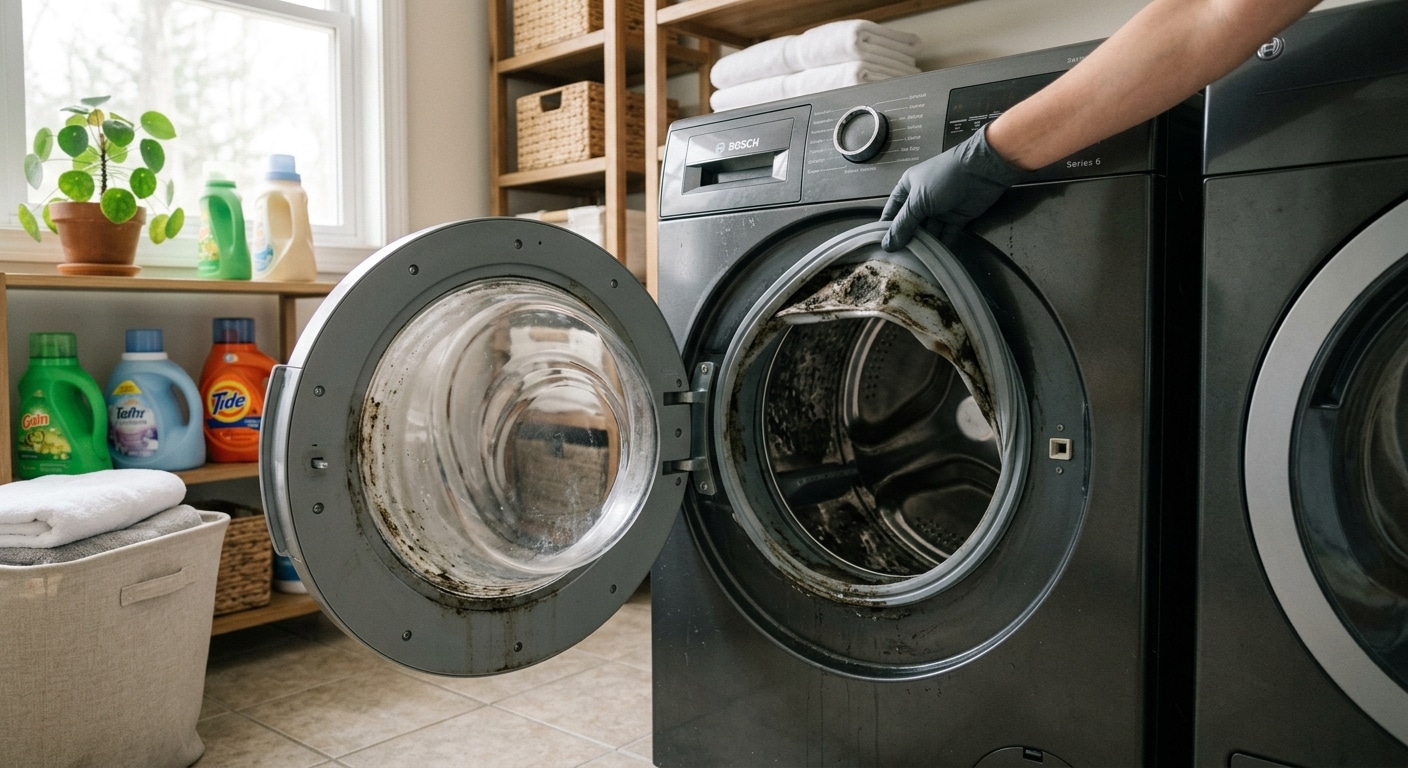
Door Gasket
The rubber seal around front-loader doors contains folds and crevices that trap water, lint, and debris. This is the most common location for visible mold growth and often the source of musty odors.
Detergent Dispenser
Soap and fabric softener residue accumulates in dispenser compartments, creating a sticky film that provides nutrients for mold. Standing water often remains in these areas between cycles.
Drum Interior
While the visible drum surface may appear clean, the back side and holes connecting to the outer tub can harbor mold growth that is difficult to detect without disassembly.
Drain Filter and Pump
The drain system collects lint, small items, and organic matter from wash loads. When combined with residual moisture, these areas become breeding grounds for bacteria and fungi.
Effective Methods to Stop Mold Before It Starts
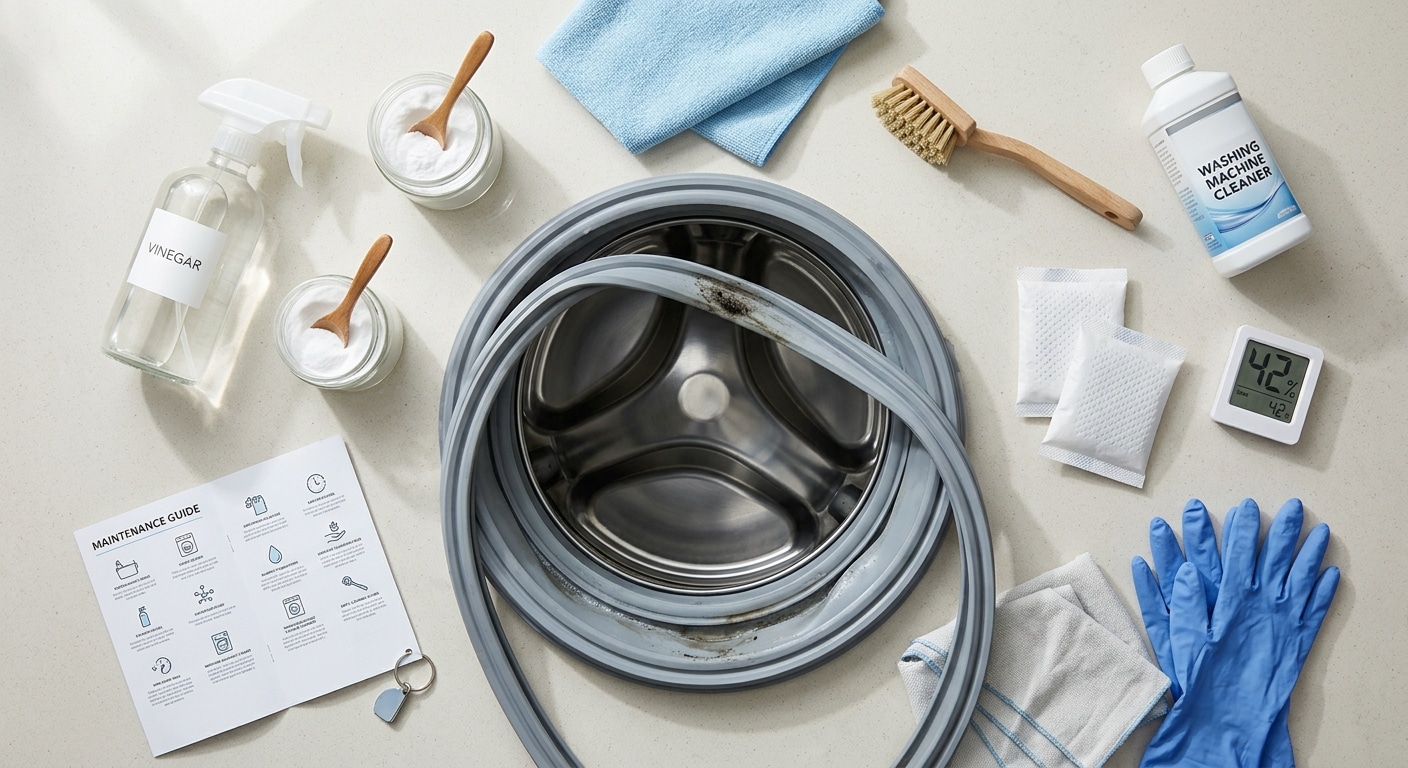
Preventing mold growth in your washing machine requires consistent attention to a few simple practices that disrupt the conditions fungi need to thrive. The most important step is leaving the washer door ajar between uses, allowing air circulation to dry the interior drum and gasket. For front-loaders, wiping down the rubber door seal after each use removes trapped water and debris from the folds where mold typically begins. Many appliance manufacturers recommend this practice in their maintenance guidelines, acknowledging the inherent moisture retention issues with horizontal drum designs.
Using the appropriate amount of high-efficiency detergent prevents the residue buildup that feeds mold colonies. The detergent cap provides measurement guidelines, and using more than recommended does not improve cleaning results. Running a hot water cycle with either chlorine bleach or white vinegar monthly helps eliminate existing mold spores and prevents new growth. Some washing machines now include a dedicated cleaning cycle designed for this purpose, which typically uses higher water temperatures and extended agitation to sanitize internal components. Removing wet laundry promptly and avoiding the storage of damp items in the closed machine further reduces the moisture levels that mold requires.
Daily and Monthly Prevention Practices
After each wash, leave the door open and wipe the gasket dry. Remove the detergent dispenser weekly for cleaning. Monthly, run an empty hot water cycle with two cups of white vinegar or a washer cleaning tablet. Check and clean the drain filter according to your manufacturer’s recommended schedule, typically every one to three months.
Cleaning an Already Contaminated Machine
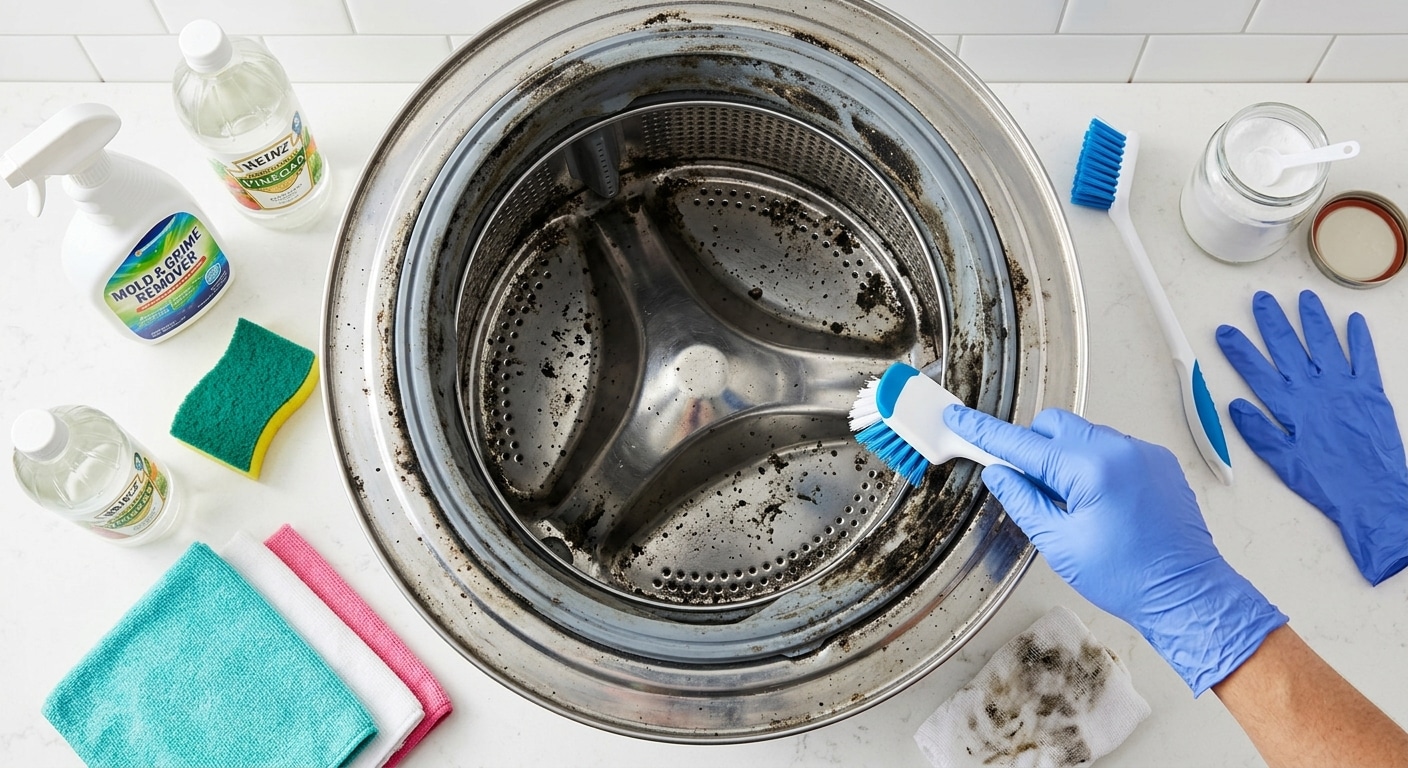
When mold has already established itself in your washing machine, more intensive cleaning measures become necessary. For visible mold on the door gasket, a solution of equal parts water and white vinegar applied with a cloth or soft brush can remove surface growth. Stubborn mold may require a diluted bleach solution, though this should be used sparingly on rubber components to prevent material degradation. Pulling back the gasket folds carefully reveals hidden areas where mold often concentrates, and these should be thoroughly cleaned and dried. The detergent dispenser should be removed entirely, soaked in hot soapy water, and scrubbed to remove accumulated residue and any fungal growth.
For machines with significant mold contamination, running multiple cleaning cycles may be necessary to address growth in areas that cannot be reached manually. Some professional appliance technicians offer deep cleaning services that include partial disassembly to access the outer drum and other internal components where mold can hide. In cases of severe contamination, particularly if occupants are experiencing health symptoms, replacement of affected rubber components such as the door gasket may be more practical than attempting complete remediation. Prevention practices should be implemented immediately after any cleaning to avoid recurrence of the mold problem.
Protecting Your Home and Health from Hidden Mold
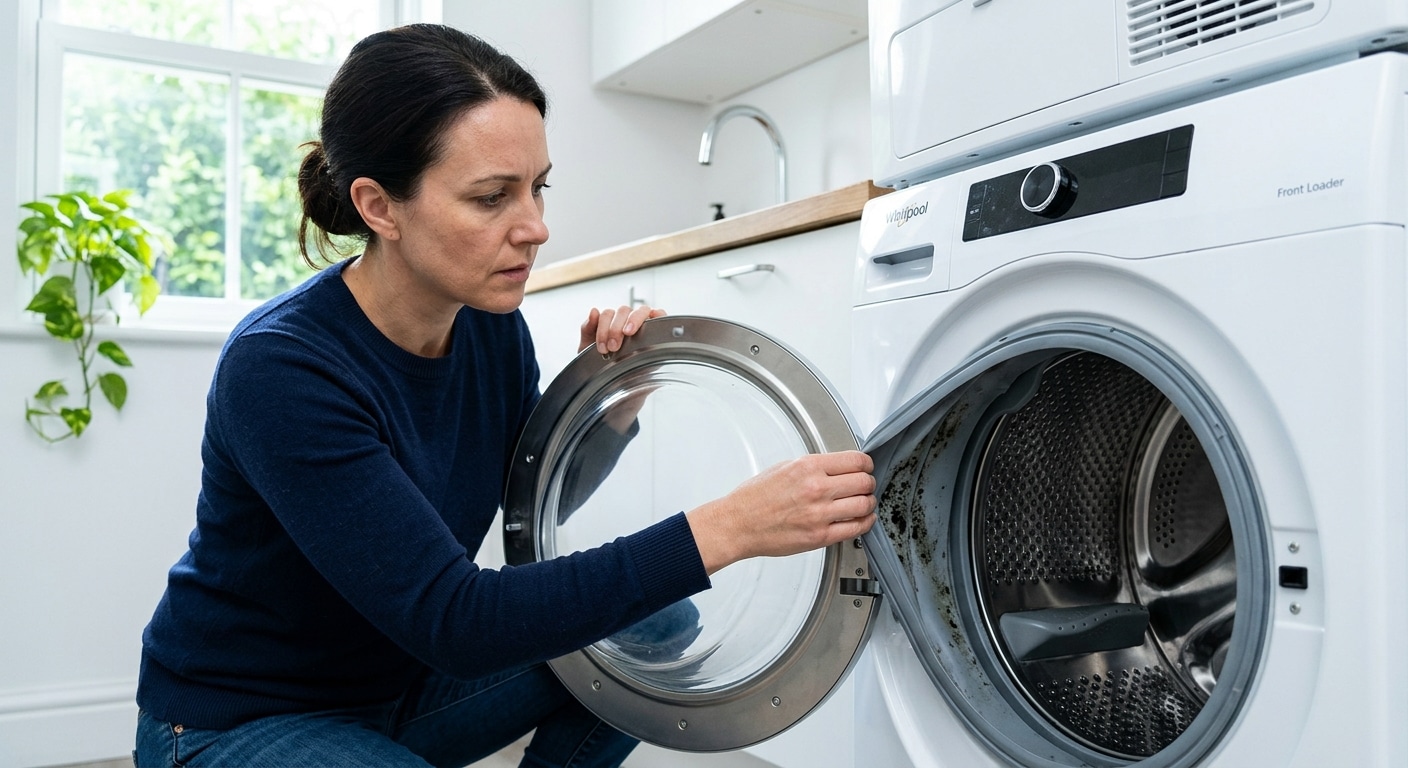
The mold growing silently in your washing machine represents a manageable household challenge that responds well to consistent preventive care and prompt attention when problems arise. By understanding that modern washing machine designs inherently create conditions favorable to fungal growth, homeowners can take proactive steps to maintain their appliances and protect their families. The few minutes required to wipe down gaskets, leave doors open, and run periodic cleaning cycles represent a small investment compared to the potential health implications of ongoing mold exposure or the cost of premature appliance replacement. Your washing machine serves as an essential tool for maintaining household cleanliness, and keeping it free from mold ensures it continues to fulfill that purpose without introducing new contaminants into your home environment.