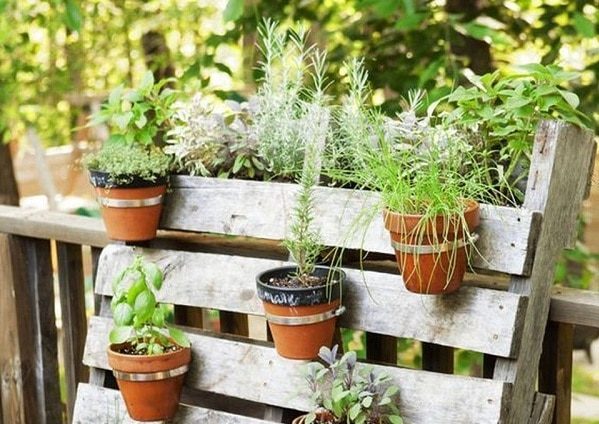
Contents
Planting And Care

Initiating the vertical garden involves planting the herbs in their designated spots. Depth is essential, as is spacing—crowding can stifle their growth. Equally vital is ensuring the soil is compact enough to support the plant yet loose enough for roots to breathe and expand.
Watering in a vertical setup can be tricky. Drip irrigation systems or self-watering containers might be more effective than traditional methods. This is because they ensure every plant gets the required moisture without waterlogging. As for nutrition, organic herb-friendly fertilizers provide the right nutrients, promoting healthy and flavorful growth.
Regular Maintenance And Harvesting

Regular check-ups can prevent potential issues. Pests like aphids or whiteflies might find your herb garden inviting. Monitoring and managing them is essential to maintain a healthy garden. Organic pest control measures are often preferred to keep the herbs safe for consumption.
Pruning ensures your herbs grow bushier and don’t become leggy. It’s not just about aesthetics; regular pruning can also increase herb yield. As for harvesting, each herb has its peak time. For instance, basil tastes best when harvested just before it flowers. Recognizing these patterns ensures the freshest and most flavorful additions to your meals.
Expanding And Customizing Your Garden
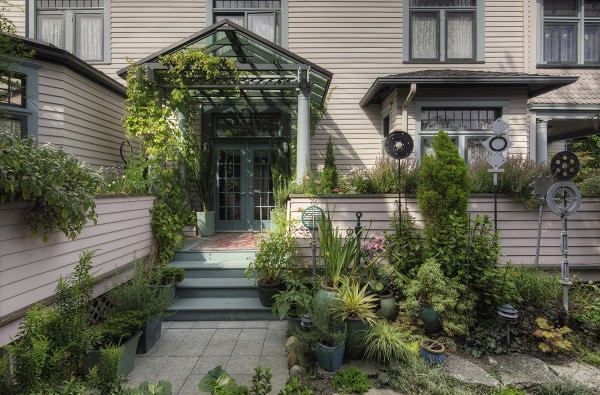
Once the basics are mastered, expanding the garden can be an exciting endeavor. There’s a world of herbs waiting to be explored. From exotic varieties to classics, there’s always room for more. And it’s not just about herbs; introducing flowering plants can add color and even assist in pest control.
Customization is where one can truly get creative. From DIY containers made from recycled materials to themed gardens—like an “Italian corner” with basil, oregano, and rosemary—there are endless possibilities to make the garden uniquely yours.
Overcoming Common Challenges

Like all gardens, vertical herb gardens come with their set of challenges. Issues like mold or mildew might arise, particularly in more humid environments. Ensuring proper ventilation and not over-watering can mitigate this. If plants aren’t thriving, it might be due to inadequate light, improper nutrition, or pests.
Ensuring longevity means occasional overhauls might be necessary. Plants might need to be rotated, or the entire setup might need a check-up. Periodic reviews ensure that your vertical garden remains a thriving, green spectacle.
Celebrating The Vertical Garden Community
Joining a gardening community can offer both support and inspiration. New gardeners can benefit from seasoned experts’ advice, while even the veterans can pick up a trick or two. Sharing successes, troubleshooting challenges, and even swapping herbs can make the gardening journey even more rewarding.
Communities, whether online or offline, also serve as platforms for celebration. Garden tours, herb tastings, or DIY project days can be fun events that bring like-minded individuals together. Celebrating milestones, be it a successful harvest or a pest management win, becomes more special in good company.
The Bottom Line
The vertical herb garden isn’t merely about saving space; it’s a testament to human adaptability and creativity. As the urban landscape becomes ever more congested, such innovations offer a green respite. They prove that nature can thrive even in the unlikeliest of spaces. With a pinch of patience, a sprinkle of care, and heaps of love, any vertical space can be transformed into a thriving herb sanctuary, enriching dishes and lives alike.